Best Time for Isla Mujeres Snorkeling: Whale Months, Dry Months, Storms
Hours, prices and access verified by the Isla Mujeres Snorkeling Tours team — last checked 2026-09-21.
The best time to visit Isla Mujeres for snorkeling depends on what you want to
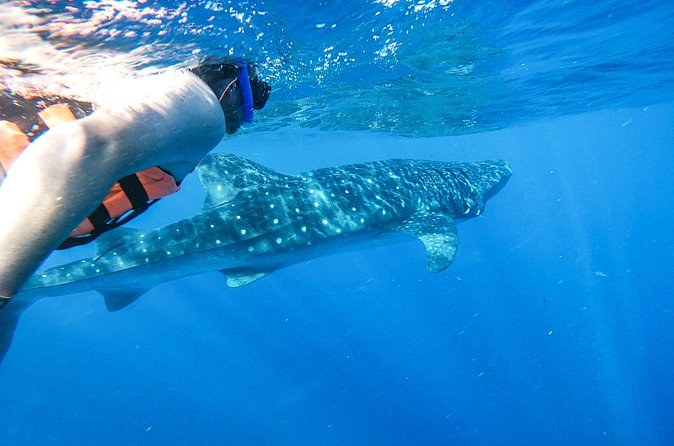
see. Whale sharks come from mid-May to mid-September. The driest months are March and April.
The rain and the storms peak in autumn. Pick your goal first, then the month, then the
snorkeling tours in Isla Mujeres that fits it.
The short answer by goal
If you want
Go in
Why
Whale sharks
Mid-May to mid-September
SEMARNAT's season: 15 May to 17 September
The least rain
March and April
38.7 mm and 42.3 mm, the lowest in Cancún
Isla Contoy
February to December
January's north winds often close the port
Whale sharks with less rain
July
67.0 mm on about 9 days, mid-season
To avoid storms
December to May
Outside the 1 June to 30 November season
Reef trips and the museum run in every month. CONANP's own advice for the park is that any
time of year is a good time to go. The calendar matters most if you want the whale sharks or
Isla Contoy.
Know your month?
Compare the reef, museum, whale shark and private trips by what the fare covers and where they start.
15 May to 17 September. SEMARNAT sets these dates for
the Mexican Caribbean for 2025, 2026 and 2027. No operator offers whale sharks year-round, and
none sells a swim outside them.
Inside the window, every month works. July is the driest of the whale shark months in
Cancún's records, with 67.0 mm of rain. June and September are the wettest, at 184.4 mm and
181.5 mm. If you come late in the season, book before the 17th.
The sharks are wild, so a sighting is never certain on any date. The rules in the water
and the shape of the day are on the whale shark
experience.
The dry spring
March and April are the driest months in Cancún, across the channel. March has the least
rain, 38.7 mm, and April the fewest rain days, about four. Highs climb from 31.5 °C in
March to 33.1 °C in April.
This is the easy season for a reef trip. The boats run, the rain rarely interrupts a
morning, and the museum is often clear. It is also a busy time for travel to the Mexican
Caribbean, so book your trip a few days ahead.
Rain and hurricane months
Hurricane season runs from 1 June to 30 November.
The US National Hurricane Center counts the Caribbean Sea in the Atlantic basin, where an
average season brings 14 named storms and 7 hurricanes. Book a trip that refunds you in full
up to 24 hours ahead, and check the month-by-month weather before you
fix your dates.
October is the wettest month in Cancún's records, with 277.1 mm on about 18 days. September
follows at 181.5 mm. Rain here often comes in short, heavy showers, and many mornings stay
dry. A storm is a different matter: the port closes and trips are cancelled.
January north winds and Isla Contoy
In winter, north winds called nortes cross the Gulf of Mexico. CONANP says Isla Contoy can
be visited all year except January, when these winds blow and the port rarely opens. The
Contoy Adventours day is the one trip here that goes there.
If Contoy matters to you, choose another month, and keep a spare day in your plans. The
reef trips around Isla Mujeres sit in more sheltered water and are less affected, but the
captain still makes the call.
Morning or afternoon
Most reef trips last three to four hours, so a morning and an afternoon trip both fit in a
day. The longer days start early. The Contoy Adventours day meets at 8:30am, and the whale
shark days run for six hours or more, so they take up most of your day.
Casa del Buceo lets you choose a start time within its daily window, which suits a
traveller with a ferry to catch. For the calmest look at the statues, choose a morning after
a still night.
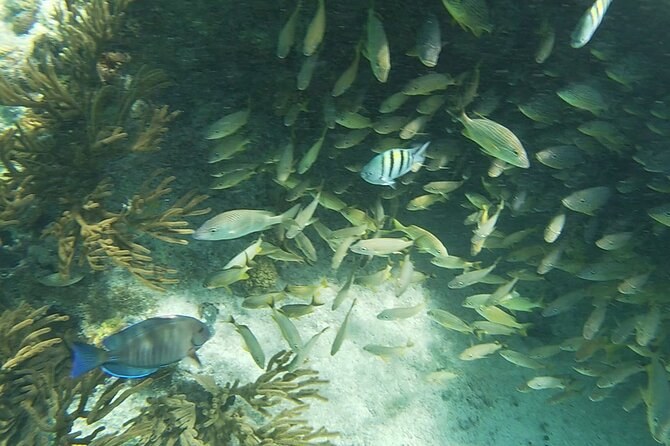
A school of silvery fish and a blue tang in shallow water over coral
Questions about timing
When is the best time for Isla Mujeres snorkeling?
March and April are the driest months in Cancún's records, and the whale sharks come from mid-May to mid-September. October is the wettest month, inside the hurricane season that runs from June to November.
When is hurricane season?
From 1 June to 30 November, according to the US National Hurricane Center. Book a refundable trip and watch the forecast in those months.
What is the wettest month on Isla Mujeres?
October, in the Cancún records across the channel: 277.1 mm of rain on about 18 days. June and September are the next wettest.
Can I see whale sharks in October?
No. The season SEMARNAT sets for the Mexican Caribbean ends on 17 September, and no whale shark swims are sold after it. October is a reef-and-museum month.
What happens if the weather is bad?
The operator decides on the day, and may swap a stop or cancel. CONANP notes that the January north winds often keep the port closed for Isla Contoy.
Where these facts come from
Rain and temperature are SMN-CONAGUA's climate normals for Cancún, station 23155, for
1991–2020, checked 21 September 2026. The whale shark season is SEMARNAT's; the hurricane season and
its averages are the US National Hurricane Center's; the January closure of Isla Contoy and the
park's own advice are CONANP's.
Six hours on a boat for up to ten, with lunch, snacks and soft drinks, from the downtown dock or with a hotel pickup on the mainland. Sold only in the whale shark season; bring US$10 cash each for the fees.
The same three-hour reef and museum run as the shop's standard trip, on a boat that takes eight at most. Reserve admission, snacks, water and drinks are in the fare; bring US$5 cash for the dock fee.
A private sailing catamaran for up to 12 from the mainland marina, with snorkel gear, drinks and about an hour and a half on the island. Wheelchair accessible; a US$20 cash surcharge each at check-in.