Isla Mujeres Snorkeling with Whale Sharks: The Experience and the Rules
Hours, prices and access verified by the Isla Mujeres Snorkeling Tours team — last checked 2026-09-21.
From mid-May to mid-September, whale sharks gather to feed in the open sea off
Isla Mujeres. You ride out for about an hour, then slip in two at a time with a guide and swim
beside the largest fish in the sea. Here is how the day runs and the rules you swim by. When
you are ready, compare the Isla Mujeres whale shark tours.
The 15 May–17 September window
Season
15 May to 17 September, set for 2025, 2026 and 2027
Set by
SEMARNAT, in its management plan for the Mexican Caribbean
The animal
The whale shark, Rhincodon typus
Boats
Up to 11 m (36 ft) long
In the water
Two swimmers and one guide per boat at a time
SEMARNAT, Mexico's environment ministry, sets the season in its management plan for the
whale shark, Rhincodon typus. For 2025 to 2027 it runs from 15 May to 17 September. No
operator offers whale sharks year-round, and no swim is sold outside those dates. If you
visit in winter, the reefs and the museum are your day at sea.
Sightings are never certain. The sharks are wild and follow their food. Isla Sea Tours
writes that it may find one shark, more than a hundred, or on very rare days none.
The ride out
A whale shark day lasts six to six and a half hours. One Isla Sea Tours
timeline is typical:
About 1 hour: speedboat from Isla Mujeres to the feeding area.
About 2 hours: in the feeding area, taking turns in the water.
The ride is on open sea, and it can be choppy both ways. If you get seasick, plan for it
before you board. The trips that start in Cancún add a hotel pickup and the crossing to the
island's dock before the ride begins.
Two swimmers and a guide
SEMARNAT's plan sets out how each swim works. Your guide briefs you on it before you
reach the sharks:
The boat approaches from behind the shark, on a diagonal, with the engine stopped or
slowed.
Only two people and one guide enter the water from each boat at a time.
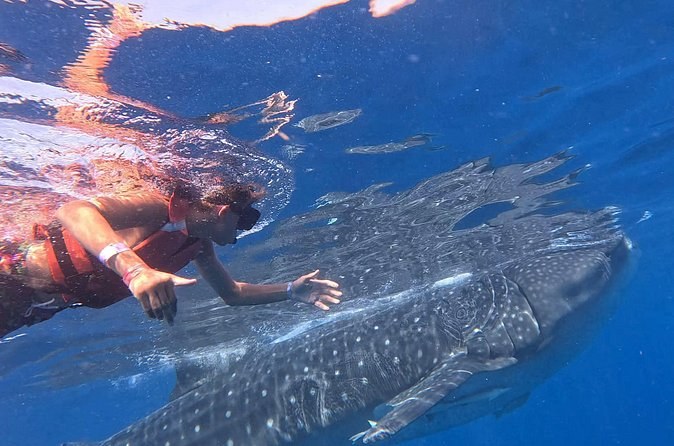
You stay at least 5 m from the shark and never touch it.
One boat stays with a shark, or a group of sharks, for at most 30 minutes.
Other boats wait at least 50 m away until it is their turn.
Every swimmer and the guide wear a full-chest life jacket, a mask, a snorkel and
fins.
So you swim in short turns, then climb back aboard while the next pair goes in. You are
in the water for minutes at a time, not hours. That is the rule doing its job.
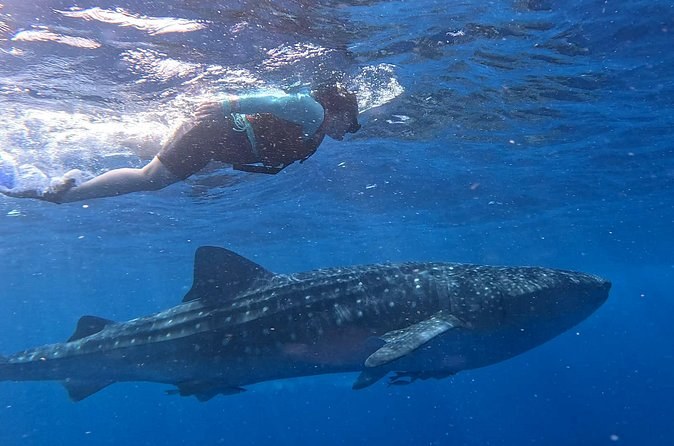
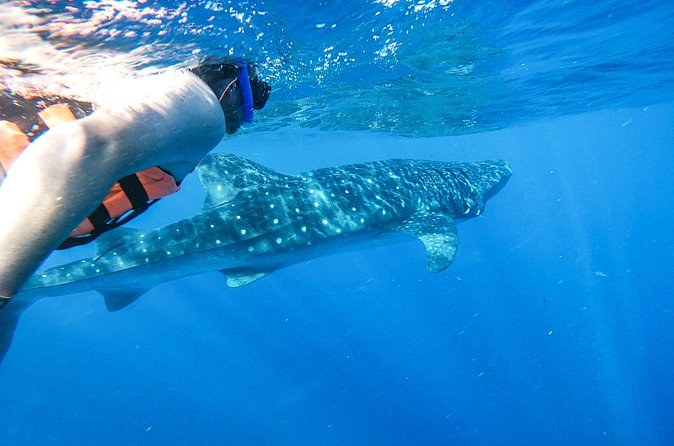
A snorkeler swimming on the surface above a whale shark
What is banned in the water
What is banned
Why
Sunscreen and tanning oil
It coats the water the shark feeds in
Touching or riding a shark
No physical contact with any animal is allowed
Selfie sticks, flash and underwater lights
They startle the animal
Blocking its path
The shark must be free to swim on or dive
Scooters and kayaks near it
Only swimmers with fins go in
Drones while people swim
Banned during a swim
Feeding and litter
Nothing goes into the water
The sunscreen rule surprises most people. Cover up with a long-sleeved shirt or a rash
vest instead. Several listings advise it too. A GoPro on a wrist strap is fine, and several
crews film you and sell the footage.
Ready for the whale sharks?
Compare the shared and private whale shark days by start point, fee and what the fare covers.
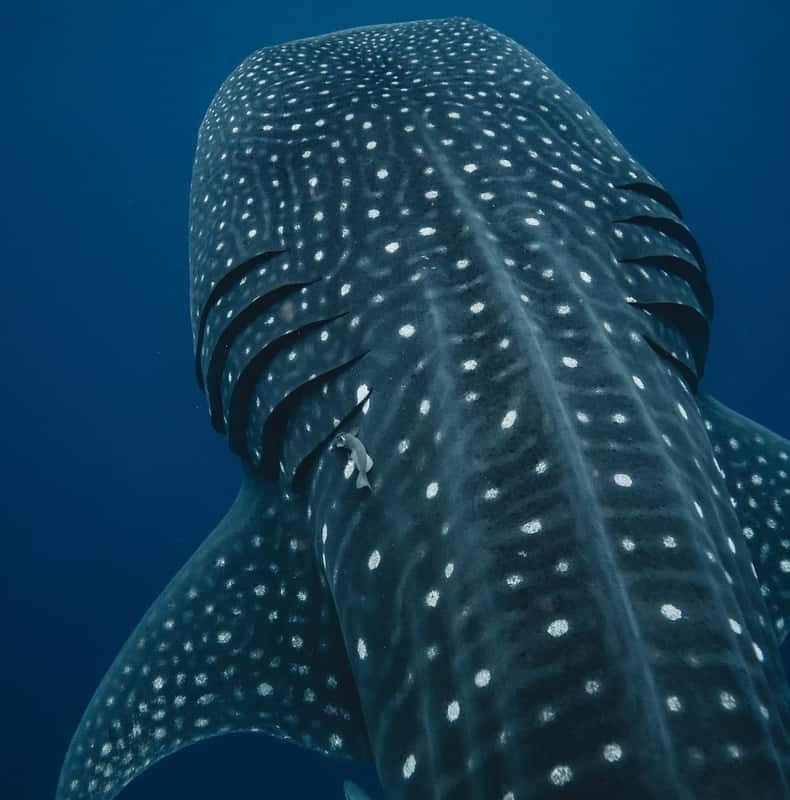
The whale shark is a fish, not a whale: SEMARNAT's plan calls it the largest fish in the
world. It gives an average length of about 12 m, up to 20 m, and a weight of over 30
tonnes. Its back carries light spots and stripes on a dark ground, like a chequerboard.
It is a filter feeder. To feed, it moves slowly near the surface, straining plankton from
large volumes of water. That slow pace near the surface is why you can swim beside it for a
while.
After the swim: reef and Playa Norte
Isla Sea Tours: a shallow-reef snorkel, then lunch and a swim at Playa
Norte on the island's north tip. Its other whale shark day offers the north beach or the Isla Che
reef.
Isla Fun Tours: lunch and snacks, bottled water and soft drinks after the
swim, on both its shared and private whale shark days.
What to budget: a cash fee of US$10 or US$20 a person, depending on the
listing, plus tips and any photos you buy.
What to bring on a whale shark day
A long-sleeved shirt or rash vest. Sunscreen is banned in the water, and
you spend hours in open sun.
Cash for the fee and tips. The listings ask US$10 or US$20 a person on the
day.
A towel and a dry layer. The ride back is fast and windy.
A camera with no flash. Selfie sticks and lights stay on the boat.
Lunch and the snorkel gear are in every whale shark fare. Alcohol is not included on
the Isla Fun Tours days, so check your card if that matters to you.
Who should not go
The whale shark listings are clear on this. They advise against the day for travellers
with back problems, heart problems or other serious medical conditions. Some also advise
against it in pregnancy, or for people who get seasick easily.
If that is you, the reef trips are shorter, stay close to the island and still put you in
the water. The reef snorkeling day explains how they
run.
Questions about the whale sharks
When is the whale shark season?
From 15 May to 17 September, the dates SEMARNAT has set for the Mexican Caribbean for 2025 to 2027. No operator offers whale sharks year-round, and outside those dates no whale shark swims are sold.
Are whale sharks guaranteed?
No, they are wild. One operator says it may find one, more than a hundred, or on rare days none.
How close can I get?
At least 5 m away, with no touching, under SEMARNAT's rules. One boat stays with a shark for at most 30 minutes while others wait.
Can I bring a GoPro?
Yes, but no flash, lights or selfie sticks around the whale sharks. Several crews film you and sell the footage.
Can children swim with the whale sharks?
Each listing sets its own minimum age, so check the card before you book. Anyone who swims needs to handle open water with waves.
Do I need to be a strong swimmer?
You need to be at ease in open water with waves, far from shore. The life jacket is compulsory and keeps you afloat, and a guide swims beside you. If you are nervous in deep water, try a reef trip first.
Where these facts come from
The season, the rules in the water, the boat size and the animal's size are SEMARNAT's,
from its Plan de Manejo Tipo for the whale shark in the Mexican Caribbean, checked 21 September 2026. The
timeline, the stops after the swim, the fees and the health advice are from the operators'
own descriptions of their trips.
Six hours on a boat for up to ten, with lunch, snacks and soft drinks, from the downtown dock or with a hotel pickup on the mainland. Sold only in the whale shark season; bring US$10 cash each for the fees.
Your own boat and guide for a six-hour whale shark day in season, with lunch, snacks and soft drinks. Pickup from Cancún or a downtown dock; the listing prices it per person, plus US$10 cash each.
A whale shark day on a twin-engine boat, with drinks all day, a ceviche and guacamole lunch and a shallow snorkel or beach stop on the way back. Hotel pickup from the mainland; US$20 each in fees before boarding.