First-Time Isla Mujeres Snorkeling: What to Expect
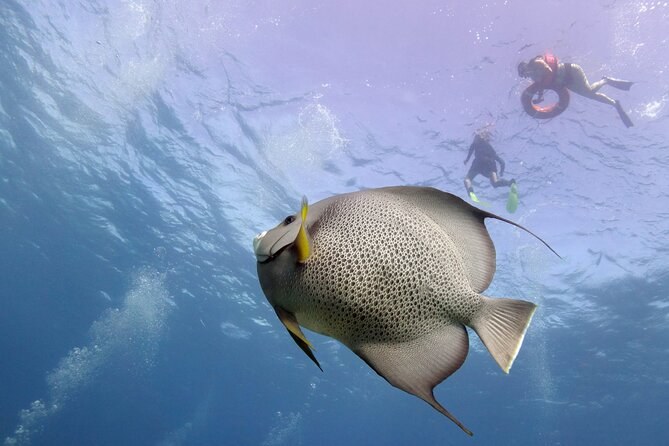
The short answer. Yes, your first snorkel can be here, and the island makes it easier than most places. You wear a life jacket the whole time, because the national park requires it. A guide swims with your group. The first stop on many Isla Mujeres Snorkeling guided tours is a shallow drift where the current does the work. The two hard parts are the jump off the boat and the ladder back up, and both are manageable.
The worry most first-timers have
Most of you worry about the same thing: what if I cannot swim well enough? Here, you float. The park makes a life jacket compulsory, so you lie on the surface with your face in the water and breathe through the snorkel. You do not need to tread water or dive. Linda T. found the required life belt made the trip better suited to novices.
Your guide stays in the water with the group. Coline M. was nervous on a first snorkel, and a patient guide and a group of about nine made it easy. Majda, also new to it, had a guide who explained everything and stayed close. If you cannot swim at all, tell the operator when you book. Sandesh M. found the Pocna crew kept even non-swimmers safe.
What happens, step by step
- At the meeting point, the crew fit your mask, snorkel and fins, and a life jacket.
- On the ride out, the guide explains the stops and the rules.
- At the first stop, you jump or slide in from the side, and the guide checks your mask.
- In the water, you float face down and follow the guide.
- At the end, you swim back and climb a ladder at the stern.
- Between stops, you sit, drink water and get your breath back.
How a reef trip runs, with the park's rules and the fees, is set out on the snorkeling adventure page.
Getting in and getting out
This is the part nobody warns you about. On most boats you jump off the side, and you climb back up a ladder. Mercedes W. found the bottom rung sits at water level and the rungs are far apart, which strains your legs and back. If that worries you, say so before you board, and ask to go in down the ladder.
On a rough day the boat bobs, which makes the ladder harder. Take your fins off in the water and hand them up first, then climb with both hands. The whale shark boats are harder again: you jump from a moving deck into open sea, which is why they are not a first snorkel.
The drift, and why it helps
The first stop on the three-stop trip from Av. Hidalgo is a drift. You drop in upstream of the small lighthouse, El Farito, and the current carries you along the reef. Christopher W. called it easy, with no hard swimming. For a first-timer, that is the ideal start: you just float and look.
Not every trip is so gentle. Alexis M. found one reef trip fast-paced and choppy, with about 20 minutes a stop, and better for people who have snorkeled before. So if you are nervous, pick a trip where the first stop is shallow, and a smaller boat. Every reef and what it is like is on the snorkeling spots page.
Which trip suits a first time
| Trip | Length | Group | Why it suits a beginner |
|---|---|---|---|
| The three-stop reef and museum trip | 3 hours | Up to 15 | Starts with the easy drift |
| The semi-private trip | 3 hours | Up to 8 | Same route, more help per guest |
| The short two-reef trip | 1 hour 15 | Up to 8 | Two shallow reefs, then done |
| The private museum boat | 4 hours | Your group, up to 12 | Your own guide, your own pace |
| A whale shark day | 6 hours | Up to 10 | Not for a first snorkel |
If you are travelling as a family or with friends who are also new, the private museum boat gives you a guide for your group only. Nobody waits for strangers, and anyone can stay aboard. On a budget, the reef and museum trip with its fees in the fare takes you to three stops, and Gredis M. found its guide pointed out everything you might miss.
Seasickness
Small boats rock, and seasickness is the complaint that comes up most. The reef trips stay close to the island, so the rides are short. If you know you get seasick, take something before you board, not once you feel it. Gredis M. said the same after a queasy ride that still turned out well.
Look at the horizon on the ride, and get into the water when the stop is called. Most people feel better floating than sitting on a rocking boat. The calmest months are on the best time to visit page.
Mask, snorkel and breathing
A leaking mask ruins more first snorkels than anything else. Push your hair clear of the seal, set the strap above your ears, and do not pull it too tight. A mask that fits stays on with gentle pressure. If water gets in, lift your head, tip it out and carry on.
Breathe slowly and deeply through your mouth. If water gets into the snorkel, blow out hard to clear it. You can always lift your head and breathe normally, and the life jacket keeps you up while you do. What to pack, from the towel to the cash for the fee, is in our packing list, and the fees themselves are in the visitor guide.
Tell the crew before you start
Crews look after beginners every day, but they can only help with what they know. When you board, tell your guide:
- That it is your first time, so they keep you close and check your mask.
- If you cannot swim, so they keep an eye on you and your life jacket.
- If you get seasick, so they know to watch for it on the ride.
- If the ladder is hard for you, so they help you in and out.
- If you want to stop, at any point; nobody minds, and the boat is never far.
Children on their first snorkel
Children do well here. Children under 12 are exempt from the park's own charge, and several trips welcome strollers and offer infant seats. On a shared boat, Erik O. found it hectic helping children with their gear, but the guides were a great help once everyone was in the water. A private boat takes that pressure away.
Keep a child's first session short. One stop in the water and one watching from the boat is a good first day. A cold, tired child will not enjoy the next stop, and on a private boat you can head back as soon as they have had enough.
How to get to the island, and which trips pick up in Cancún, is on the getting there page.
Gentle first trips
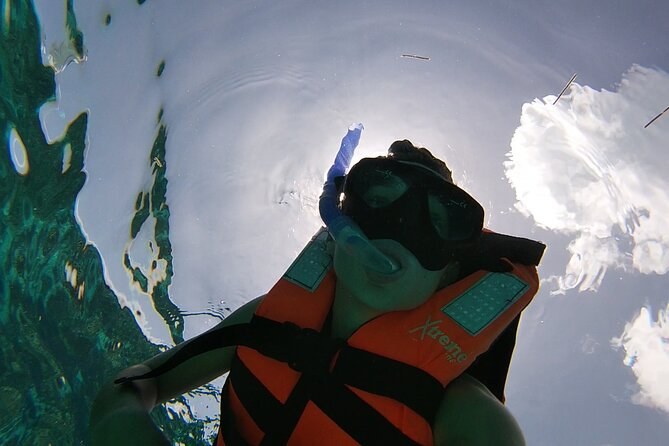
Isla Mujeres Snorkeling Adventure at the Underwater Museum
Three snorkel stops around the island with a guide, from across the ferry terminal, and every dock fee and tax already in the fare. Lunch is a US$10 add-on, and drinks are yours to bring.
From $59 per person
Check Availability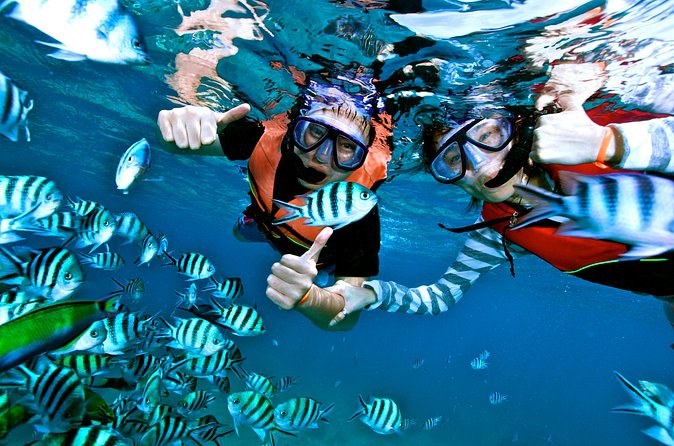
Private MUSA Snorkeling Experience at Isla Mujeres and Cancun
Your own boat for up to 12, from the ferry or your Cancún hotel lobby, with the underwater statues at your pace. Soft drinks, water and beer after; US$10 cash each for the environmental tax and dock use.
From $599 per group (up to 12)
Check Availability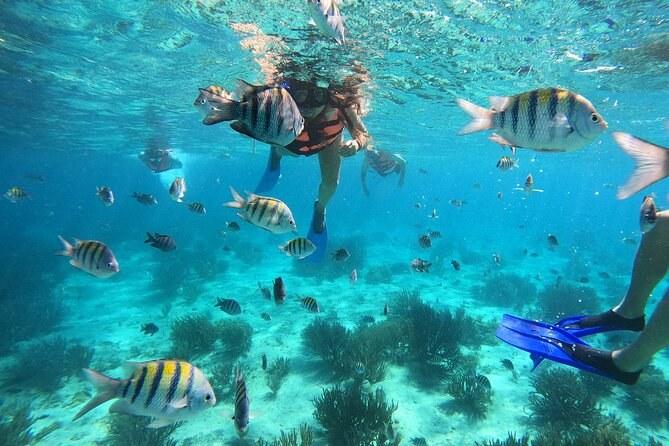
3 Hours VIP Semiprivate Tour Isla Mujeres Full Snorkeling Experience
The same three-hour reef and museum run as the shop's standard trip, on a boat that takes eight at most. Reserve admission, snacks, water and drinks are in the fare; bring US$5 cash for the dock fee.
From $88 per person
Check AvailabilityNext: Get ready for the water with our list of what to bring on the boat. Every fare sits side by side on Isla Mujeres Snorkeling Tours.