Isla Mujeres Snorkeling at the Underwater Museum: Is It Worth It?
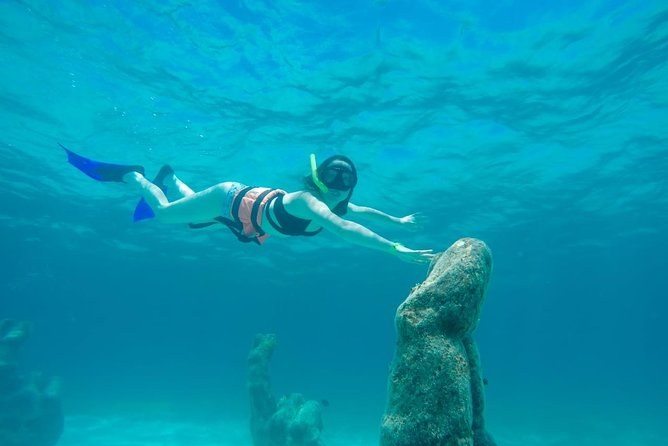
The short answer. Yes, as one stop on a reef trip, and no, as the only reason to book. The statues off Isla Mujeres stand about 8 m down, so you look at them from the surface. On a calm, clear day you see rows of figures on the sand. On a windy day they are faint shapes. The reefs around them are what most snorkelers rave about. Compare the options for the best snorkeling tour Isla Mujeres offers, and nearly all of them pair the two.
Quick facts
- What it is: the Museo Subacuático de Arte (MUSA), by the artist Jason deCaires Taylor, first installed in 2009.
- How many statues: over 500 permanent, life-size sculptures across two galleries.
- Which gallery you visit: the Manchones gallery off Isla Mujeres, about 8 m deep, open to divers and snorkelers.
- The other gallery: the Nizuc gallery off Cancún, about 4 m deep, for snorkelers only.
- What it costs: no separate ticket; it sits inside the national park, and your boat trip takes you there.
- How long you stay: usually one stop of a three- or four-hour reef trip.
What the underwater museum is
MUSA is a set of sculptures sunk on purpose in the national park that runs along the west side of Isla Mujeres and the Cancún coast. The artist, Jason deCaires Taylor, made the figures from pH-neutral cement and placed them downstream of natural reefs. The idea is that coral spawn drift onto them and settle. Over 90 local fishermen and women were cast as models.
The museum has a second job. The artist's own page says the marine park draws over 750,000 visitors a year, and that the statues give the natural reefs a rest by sharing the crowd. So when your boat stops at the statues, you are part of that plan. How the park works, and what its wristband pays for, is on the snorkeling adventure page.
What you see from the surface
Here is the fact that decides whether you enjoy it. The Manchones gallery lies about 8 m down. You float on top, in a life jacket, and look straight down through that water. On a clear, still day the rows of faces are sharp and you can pick out single figures. When the wind is up and the water is stirred, they turn grey and soft.
Travellers on the same trips see it both ways. Meghan E. found the statues hard to see after waves cut the visibility. Alice C. thought they would suit a scuba diver better. Kathleen T. loved the shallow lighthouse reef and found the museum less interesting. On a good day, though, Juliette found the sculptures covered in marine life, with good visibility. Coline M. finished a first ever snorkel at the statues, and loved it.
The statues or the reefs: how they compare
Most trips from downtown stop at both, so you do not have to choose. But it helps to know what each stop is good for, so your hopes match the water.
| The museum stop | A reef stop | |
|---|---|---|
| Depth | About 8 m to the sand | Shallow in places, a metre or two |
| What you see | Statues, and the life starting to grow on them | Coral, sea fans and fish close to you |
| Best on | A calm, clear day | Most days; the shallows stay bright |
| Weak on | Wind and waves blur it | Strong current at some stops |
| Best for | Divers, and snorkelers on a still day | Everyone, first-timers included |
The reef stops win on most days because they are shallow. At the lighthouse reef, El Farito, the coral comes up close to you and the fish are right under your mask. At the statues you are a long way above the subject. If you dive, the museum is a different thing altogether, and a dive trip there is worth asking about.
The works worth looking for
The artist lists several named works in the museum. Which ones your stop takes in depends on the gallery and the day, so treat these as things to ask your guide about:
- The Silent Evolution: a 120-tonne work of more than 400 figures, about 90 of them cast from people of the fishing village of Puerto Morelos. The artist counts more than 2,000 young corals living on it.
- Anthropocene: a cast of a VW Beetle with a child on the windscreen, nine tonnes of concrete built as a home for lobsters. This is the car that surprises people.
- Inertia: a figure on a sofa, watching television.
- Reclamation: an angel whose wings are sea fans rescued after storm damage.
Diego V. spotted the car on the sea floor on a recent trip. Kim S. found it odd to meet a lone car out in the ocean. Either way it is the piece you will talk about afterwards. More on the named sites, the Silent Evolution included, is on the snorkeling spots page.
Which trips stop at the statues
Most shared reef trips from downtown Isla Mujeres include the museum as one of their stops. The three-stop reef and museum trip pairs it with the lighthouse drift and Manchones reef, three hours from a shop on Av. Hidalgo. The three-spot trip with an hour at each gives the museum a full hour of its own. If you want to linger over the statues with only your party aboard, the private museum boat lets you stay as long as you like.
One short trip skips the museum on purpose. The Casa del Buceo run spends an hour and a quarter on two shallow reefs instead. If the pictures of the statues do not move you, that is a fair choice, and it leaves your afternoon free. Where every boat leaves from is on the snorkeling map.
How to get the most from the museum stop
Go early in your stay, so you have a spare day if the sea turns rough. The months with the least rain and the calmest pattern are set out on the best time to visit page, and the month-by-month picture is on the weather page.
- Look along, not down. The figures stand in rows, and you see more by swimming the length of a row.
- Let the guide lead. The crew know where the car and the best-kept figures stand.
- Keep your fins up. Stirred sand clouds the water for everyone behind you.
- Touch nothing. The park forbids touching any species, and the young coral on the statues counts.
- Ask about diving. If you are certified, the Manchones gallery is open to divers too.
The verdict
If you only have time for one boat trip, book a reef trip that ends at the statues and treat them as a bonus. You will see the most life at the shallow reefs, and the museum adds something no other reef has. If the sea is flat when you go, the statues may be the best part of your day. If it is not, the reefs will still carry the trip.
If you have come mainly for the statues, go on a calm morning or come back as a diver. And if you are new to all of this, start with our post for first-time snorkelers , which covers the life jacket, the ladder and the drift. What the park charges, and what a dock fee is, sits in the visitor guide.
Trips that stop at the statues
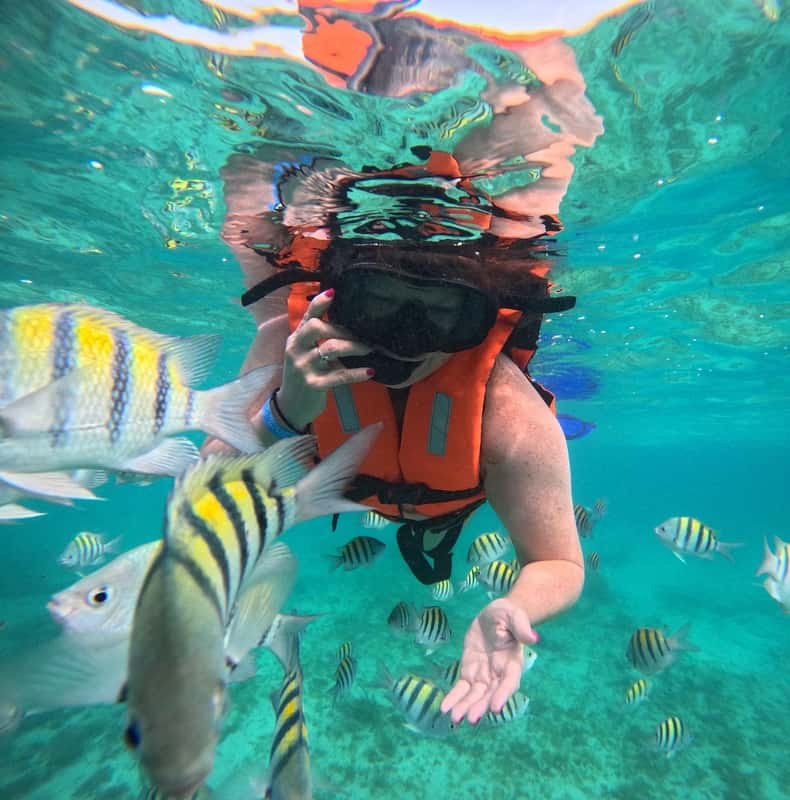
Isla Mujeres: Snorkeling tour at 3 spots, Underwater Museum and reefs!
About an hour at each of three sites: the lighthouse reef, the big reef and the underwater museum, with a bilingual guide. Mask, fins and life jacket are in the fare, and so are the marine park tax and tickets.
From $69 per person
Check Availability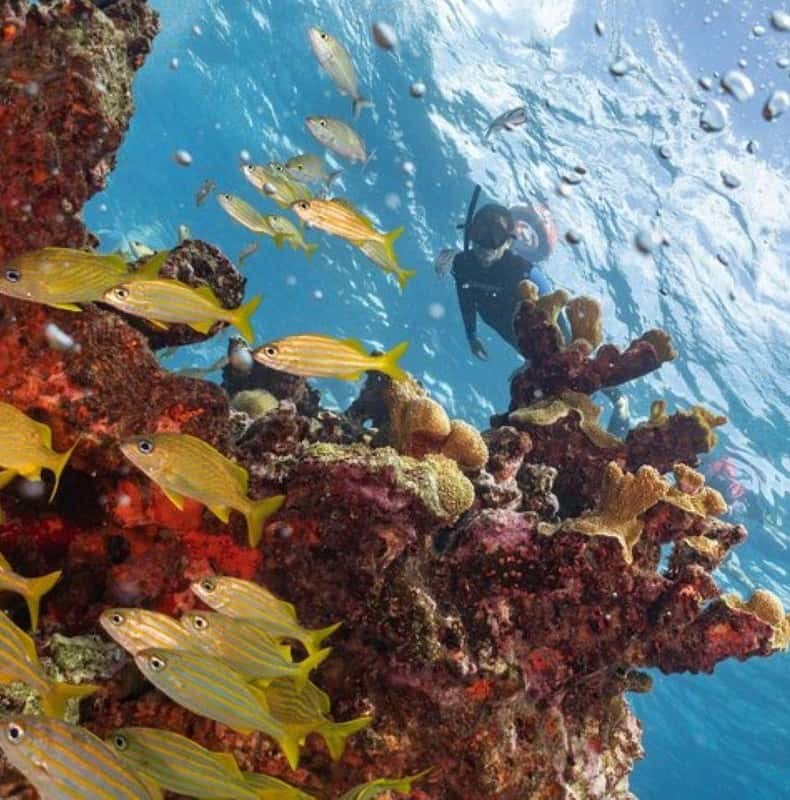
Isla Mujeres: Snorkel Tour at Musa and Manchones Reef
The underwater statues and the big reef from a downtown dive centre, with gear, cookies, fruit and water. The listing counts the park and dock fees as included and also asks for US$15 in cash, so bring it.
From $50 per person
Check Availability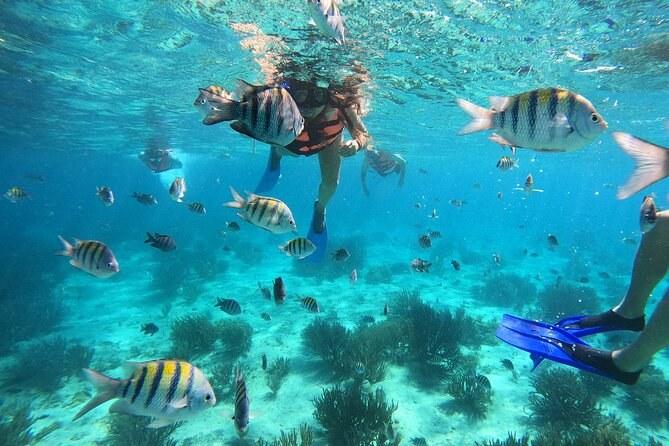
3 Hours VIP Semiprivate Tour Isla Mujeres Full Snorkeling Experience
The same three-hour reef and museum run as the shop's standard trip, on a boat that takes eight at most. Reserve admission, snacks, water and drinks are in the fare; bring US$5 cash for the dock fee.
From $88 per person
Check AvailabilityNext: See what else swims past on the way in our guide to the sea life off the island. Every fare sits side by side on Isla Mujeres Snorkeling Tours.