Isla Mujeres Snorkeling: What Sea Life Will You See?
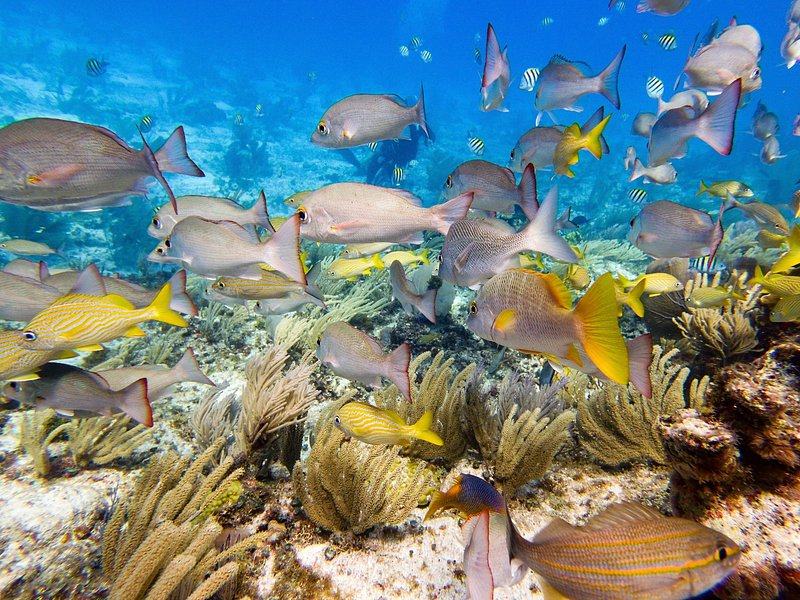
The short answer. On a reef trip you can expect tropical fish, coral and sea fans, and you may see rays, turtles and barracuda. The national park lists elkhorn and staghorn coral, hawksbill turtles and spotted eagle rays among its species. In summer, whale sharks feed out in the open sea. Every animal here is wild, so no trip promises any of them.
What the park lists
The reefs off Isla Mujeres belong to the Costa Occidental national park, part of the Mesoamerican Reef System. CONANP, which runs the park, names these as its representative species:
- Elkhorn coral and staghorn coral, the branching corals of the shallows.
- Hawksbill turtles, the sea turtle most often named for this park.
- Spotted eagle rays, the rays with white spots on a dark back.
- Queen conch, the big pink-lipped sea snail.
- Three seagrasses, turtle grass among them, and two algae.
The park's SIMEC record adds more, with photos taken in the park: brain coral, sea fans, fire coral, star coral, spiny lobster, grunts and a grey angelfish beside a sea fan. It also shows an elkhorn coral nursery, and a picture of El Farito, the lighthouse reef. What each reef is like is on the snorkeling spots page.
What travellers find on the reef trips
The park's list is what lives here. What you meet on a given afternoon is another matter, so here is what people on the trips found:
| What | Where it turned up | How it was seen |
|---|---|---|
| Rays | The lighthouse drift, other reefs | Often, gliding under the group |
| Sea turtles | Most reef stops | Often, one or two at a time |
| Barracuda | The deeper reefs | Now and then, hanging still |
| Pufferfish and angelfish | The shallow reefs | Most days, close to you |
| A small shark | The three-spot trip | Once in a while |
| Lobster and octopus | The reef stop on the Contoy day | When a guide finds them |
Alice C. saw three stingrays and a turtle at the first stop of the three-stop trip. Jeremiah B. found pufferfish, angelfish and a ray. Melanie saw rays, turtles and a small shark on the three-spot trip, and Karen turtles and barracuda. On the Contoy day, Matthew C.'s guide found a lobster and an octopus.
The coral, and why you must not touch it
The coral you see is the base of everything else. Elkhorn coral grows in wide, flat branches near the surface, which is why it is so easy to scrape. The park's rules are plain: do not touch any species, do not feed the fish, and wear your life jacket. A life jacket keeps you floating high, which keeps your fins off the coral too.
Kathleen T. found the lighthouse reef shallow, with soft coral and a great deal of life. The same traveller found the corals at the third, deeper stop bleached. So what you see changes from reef to reef, and year to year. The five park rules, and what the wristband pays for, are on the snorkeling adventure page.
The fish you will learn to name
After one trip, a handful of fish become old friends. These are the ones the park's own photos and the travellers on the trips name most:
- French grunts: yellow-striped fish that hang in loose schools over the coral. The park's photos show them beside the sea fans.
- Grey angelfish: flat, round and slow, and not shy of snorkelers.
- Parrotfish: bright, and you can often hear them biting at the coral.
- Pufferfish: small and round-eyed, usually close to the bottom.
- Barracuda: long and silver, hanging still just below the surface.
Hana W. counted pufferfish, parrotfish and barracuda on one afternoon, with a stingray and a green turtle. Malloe S. added squid and eels to the statues and turtles. Ask your guide to name what you see: most crews point things out as you swim.
Seagrass, and the coral that stings
Between the reefs lie meadows of seagrass. CONANP lists three kinds in the park, turtle grass and manatee grass among them, and one of its five rules is that boats must not anchor on them. The meadows shelter young fish and feed the turtles, so a patch of grass is a good place to look for a turtle grazing.
The park's records also list fire coral, and it earns its name. It looks like a smooth, mustard-coloured branch or plate, and brushing it with bare skin leaves a burning rash. A rash guard helps, and so does keeping your hands tucked in as you float.
Whale sharks: the summer giants
The biggest animal you can swim beside here is the whale shark, Rhincodon typus. It is a fish, not a whale, and SEMARNAT's plan for it describes animals commonly around 12 m long, reaching up to 20 m and over 30 tonnes. It feeds slowly near the surface, filtering plankton, which is why you can swim beside it.
They come to the waters north of the island in summer, and the season for swims runs from 15 May to 17 September. They are not guaranteed even then. One whale shark operator says it may find one, more than a hundred, or on rare days none. The rules in the water, from the distance to keep to the ban on sunscreen, are on the whale shark experience page, and the days that go out are compared on Isla Mujeres whale shark tours.
The same open water brings other animals. Mackenzie I. saw manta rays at the whale shark site, then turtles and dolphins on the way back. The shared whale shark day spends most of its six hours out there.
The bird island
If birds interest you as much as fish, Isla Contoy is the other half of the picture. CONANP lists brown pelicans and magnificent frigatebirds among its species, with spiny-tailed iguanas and hermit crabs on land. Its reef stop can turn up lobster and octopus. Our comparison of the bird island and a reef trip sets the two days side by side.
How to see more
Most of what you see depends on light, calm water and patience. These habits help:
- Go on a calm day. Wind stirs the water and hides the fish.
- Float still. Fish come back to a quiet swimmer.
- Follow the guide. The crew know where the turtles rest.
- Look under ledges. Lobsters and eels hide in the gaps.
- Keep your distance. Rays and turtles leave when you chase them.
The calmest months, and the months to avoid, are on the best time to visit page. Remember that the sea decides: a day with nothing but fish is still a day on a living reef.
One last thing: leave every shell where it lies. The queen conch is on the park's own list of species, and its rules forbid touching any of them, empty shells on the sand included. Take photos instead. A picture of a conch on the seabed, or a turtle over the grass, is the souvenir that lasts, and it leaves the reef as you found it for the next boat of snorkelers.
Trips for the sea life
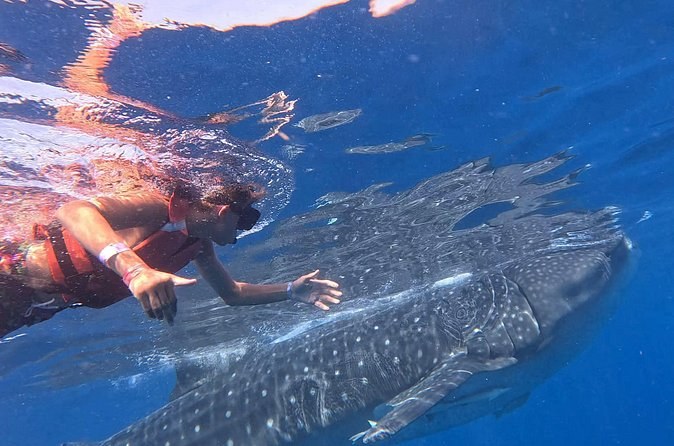
Private Whale Shark Adventure in Isla Mujeres and Cancun
Your own boat and guide for a six-hour whale shark day in season, with lunch, snacks and soft drinks. Pickup from Cancún or a downtown dock; the listing prices it per person, plus US$10 cash each.
From $699 per person
Check Availability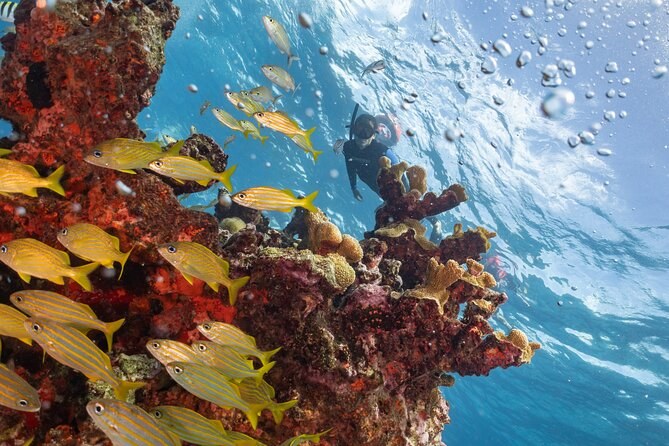
Snorkel Tour at Musa and Manchones Reef
The statues and the big reef in four hours from a small dive centre, twelve guests at most, with gear and snacks. Put reef-safe sunscreen on before you board; none is allowed once aboard.
From $64 per person
Check Availability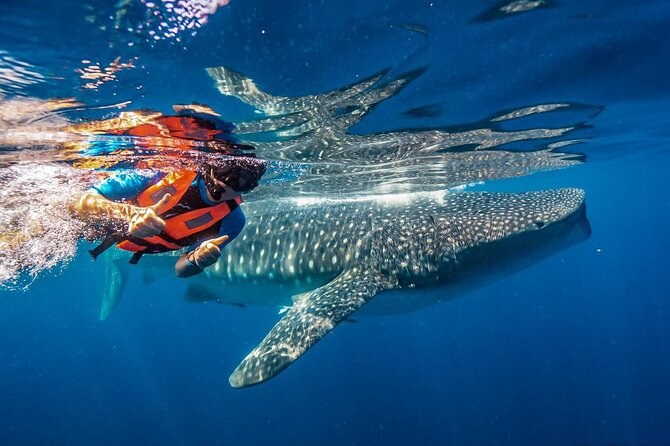
Cancun, Isla Mujeres and Riviera Maya: Swim with whale sharks!
A six-and-a-half-hour whale shark day with a certified bilingual crew, lunch, and a stop at a beach or a reef on the way back. From the downtown pier or the mainland; US$20 each in dock and park fees.
From $160 per person
Check AvailabilityNext: Weigh the statues against the reefs in our verdict on the underwater museum. Every fare sits side by side on Isla Mujeres Snorkeling Tours.